


• Home
  • About
  • Contact
  • RSS

  • Current Issue
  • Archives
  • Advertising
  • Donate
  • Links
  • Submissions
  • Subscribe


Current Issue

We Call for the United States to End Its Wars in Afghanistan and Pakistan!

by CAMPAIGN FOR PEACE AND DEMOCRACY Winter 2010

THIS MAY BE A TURNING POINT for the expanding U.S./NATO wars in Afghanistan and Pakistan, a time when speaking out clearly and unambiguously against war can make a crucial difference. Today we see signs all too reminiscent of the step-by-step deepening of the U.S. commitment to the war in Vietnam in the 1960s. In response, we declare ourselves firmly against military escalation in the region and for the withdrawal of all U.S. and NATO forces from Afghanistan and Pakistan now. We also call for an end to drone attacks in both countries.

more

Women’s Work, Mother’s Poverty: are men’s wages the best cure for women’s economic insecurity?

by Gwendolyn Mink Winter 2010

In the 2008 Democratic Party platform, the only provision with women in the title was one promising "Opportunity for Women." The provision pledged "that our daughters should have the same opportunities as our sons,"1 confining measurement of women's equality to our access to men's jobs and men's wages. The nomination, then election, of the first African-American presidential candidate portended and promised great change.

more

Paid Family and Medical Leave

by Randy Albelda and Betty Reid Mandell Winter 2010

How many people can afford to take time off from work without being paid? Not many. When a worker gets sick or a child or parent gets sick; when a woman is giving birth or when a parent needs to go to a conference with a teacher, leaving work can not only cost a day's pay, but it can cost advancement in a career. Women, who do most of caregiving, are particularly disadvantaged.

more

Feminism in "Waves": Useful Metaphor or Not?

by Linda Nicholson Winter 2010

By the early 1990s, it had become clear that the kind of feminist activity that had blossomed from the late 1960s through the late 1980s in the United States was no longer present. Consequently, many began to ask: what was the present state of feminism?

more

Nor Meekly Serve Her Time: Riots and Resistance in Women's Prisons

by Victoria Law Winter 2010

IN 1974, WOMEN IMPRISONED at New York's maximum-security prison at Bedford Hills staged what is known as the August Rebellion. Prisoner organizer Carol Crooks had filed a lawsuit challenging the prison's practice of placing women in segregation without a hearing or 24-hour notice of charges. In July, a court had ruled in her favor. In August, guards retaliated by brutally beating Crooks and placing her in segregation without a hearing. The women protested, fighting off guards, taking over several sections of the prison, and holding seven staff members hostage for two and a half hours.

more

Still fighting: Interview with Judi Chamberlin

by Betty Reid Mandell Winter 2010

Judi Chamberlin is one of the founders of the mental patients' liberation movement. In 1988, she wrote On Our Own, a book about her own experience with depression 43 years ago, when she was hospitalized against her will. That book became a kind of bible for the mental patients' liberation movement. Now the 64-year-old activist is dying of chronic obstructive pulmonary disease, an incurable lung disorder. Late last year she stopped hospitalizations and instead opted for home hospice care.

more

Card Check: Labor's Charlie Brown Moment?

by Robert Fitch Winter 2010

The Passive Revolution

Sometimes the story is just an appendage to the back-story. What it means for Sisyphus to watch his rock roll back down the hill can't be understood unless we know it was not exactly the first time. Organized labor's recent effort to move the Employee Free Choice Act -- popularly known as "card check" -- up Capitol Hill involves a similar back-story.

more

What Happened to the American Working Class?

by Dan La Botz Winter 2010

The collapse of the financial sector of the United States detonated the current global economic crisis, and its auto industry was soon crumpling as well.[1] Yet, though it all began here, American labor unions and workers have been slow to respond and their response has been weak. Millions of workers in hundreds of French cities have struck and demonstrated repeatedly against their government and against the banks and corporations throughout the spring of 2009, and the story was similar in Italy and Greece.

more

Why We Need a Global Green New Deal

by Ashley Dawson Winter 2010

The United States, and with it the rest of the world, is experiencing the initial stages of an unprecedented emergency brought on by three intertwined factors: a credit-fueled financial crisis, gyrating energy prices linked to speculation about the future peaking of oil supplies, and an accelerating climate crisis.

more

Village Elections in China -- Democracy or Façade?

by Richard Levy Winter 2010

Do elections of self-governing Village Committees in China's signify a major step towards democracy? How, if at all, do these elections affect power relations among various groups, class strata, and nascent or even actual classes in the Chinese countryside? Inside and outside of the villages, who makes decisions about how the village will evolve or develop?

more

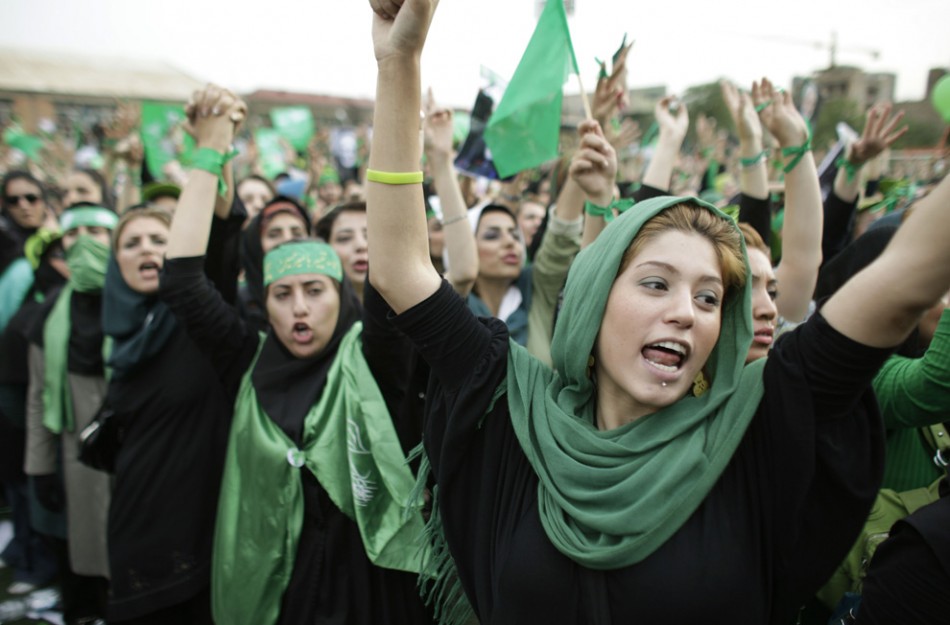
Iranian Workers say: "We have nothing to lose but our unpaid wages"

by Yassamine Mather Winter 2010

Half a year after the demonstrations of June, 2009 in Iran, it is probably easier to examine in more depth the events that changed the country's political landscape. The bourgeois media in Iran and abroad is unanimous: the presidential elections of June 2009 and predictions of a Moussavi victory gave hope that change within the exiting regime was possible; millions of Iranians took part in the elections; the regime rigged the results; the rest is history.

more

The Rescue of Bulgaria's Jews in World War II

by Rossen Vassilev Winter 2010

On February 13, 1998, Bulgarian President Petar Stoyanov accepted on behalf of his ex-Communist nation the Courage to Care Award, which the Anti-Defamation League (ADL) had bestowed upon Bulgaria in recognition of the heroism of its people in saving Bulgarian Jews during World War II.

more

Birds and Cages: Reading Sex and the State in Janet Afary's Sexual Politics in Modern Iran

by Amy Littlefield Winter 2010

Janet Afary is hopeful about the future of women's rights in Iran. And she identifies many reasons to be so, from secret individual acts of resistance by women against husbands, fathers, and dictators to collective feminist struggle and today's One Million Signatures Campaign for equal rights. But Sexual Politics in Modern Iran also reveals the full force of the cultural and political systems that the Iranian movement for gender equality confronts.

more

Blogs & On-Line Features

Howard Zinn (1922-2010)

[Editors' note: Howard Zinn, among his multitude of other contributions to the left, was a long-time sponsor of New Politics. We express our deepest sympathies to his family and post here an article by NP board member Steve Shalom that will be appearing in the spring issue of Democratic Left.]


more

Worcester on NP & Covers

Joanne Landy February 4, 2010

Former New Politics editor Kent Worcester has written a nice appreciation of New Politics and its covers by Bob Gill.

more

Judi Chamberlin

Betty Reid Mandell February 2, 2010

     Judi Chamberlin, one of the founders of the mental patients’ liberation movement, died January 2010 at her Arlington, MA home from chronic obstructive pulmonary disorder, a lung disease, at the age of 65.

more

'Bows of pseudo-profundity' and 'moral certitude': Alan Johnson and Democratiya

Roger Spalding February 1, 2010

The merger of the online journal Democratiya, with Dissent, provides an obvious point to begin assessing the role of Alan Johnson's creation. The following is not intended as the last word on this subject, but as a contribution to a process of analysis. The approach here will be to focus on the argumentation used in Democratiya, specifically in the one article written for the journal by Johnson.

more

The Politics of George Clooney’s Help for Haiti Telethon

Stephen Steinberg

I totally agree with Jesse Lemisch's astute comments about George Clooney's extravaganza and its conspicuous avoidance of anything that might be construed as "political." Of course, in the midst of a colossal disaster, this feel-good spectacle of entertainment icons is inherently political, rife with intended and unintended consequences. First of all, it is hard to separate celebrity magnanimity from self-promotion.

more

George Clooney's Haiti -- and Beyond

Jesse Lemisch

George Clooney (currently in "Up in the Air") organized on short notice a technically and musically fine two hour fund-raising telethon, "Hope for Haiti," which was broadcast on January 22 on most networks, many cable channels, on the Web, and both in and beyond the US. Here are two samplers of the music: one and two.

more

Scott Brown's Win in Context

Marvin Mandell January 23, 2010

To put the Massachusetts Senate win of Republican Scott Brown in context...

more

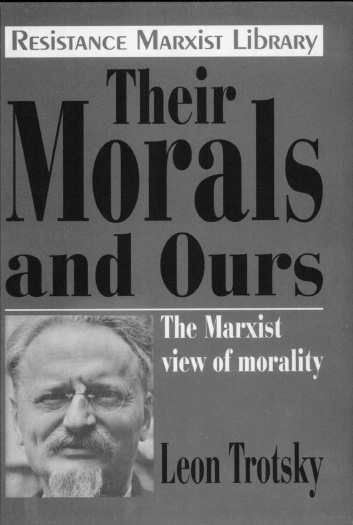
A Hostile Biography of Leon Trotsky

Reviewed by Paul Le Blanc January 1, 2010

Robert Service. Trotsky: A Biography. Cambridge, MA: Harvard University Press, 2009. 600 pages, including end notes, bibliography, index. $35.00.

more

Dennis Brutus

Sam Waite December 31, 2009

Dennis Brutus – celebrated poet, anti-apartheid fighter and lifelong socialist – died last week. As a student activist at the University of Pittsburgh in the mid-2000s, I was privileged to know Dennis in the short time before he departed for the University of KwaZulu-Natal, where he spent his last years.

more

Worth reading: “The Old Man” by Christopher Hitchens

Gertrude Ezorsky December 27, 2009

If you missed “The Old Man,” Christopher Hitchens’ review of Verso’s reissue of Isaac Deutscher’s trilogy about Leon Trotsky,

http://www.theatlantic.com/doc/200407/hitchens

do read it.

more

News update: Mexican government to meet with electrical workers, mediators

Dan La Botz December 16, 2009

The Mexican Secretary of the Interior will meet with the Mexican Electrical Workers Union (SME) and a group of mediators tonight (December 16) some months since President Felipe Calderón liquidated the state-owned Light and Power Company, seized the facilities, and fired of the 44,000 workers. The union, which has sought in the courts the return of all workers to their jobs, has more modest goals for these negotiations, according to general secretary Martín Esparza.

more

All the news that's fit to print?

Lois Weiner December 15, 2009

"All the news that's fit to print" is, of course, the slogan of the New York Times. But who determines what's "fit" and why?

We read much liberal hand-wringing about what will become of democracy without daily newspapers and reporters who serve as watchdogs of government. We need an independent press, for sure. But we don't have one.

more

Propaganda or reportage? The New York Times and education reform

Lois Weiner December 12, 2009

The New York Times provides a steady diet of glowing PR about the neoliberal policies implemented throughout the world to defund, privatize, and fragment public control of education. Two key projects are charter schools (designed to dismantle public school systems and replace them with individual schools or privately-owned and controlled networks) and “fast track” programs to eliminate traditional teacher education (deskilling teaching and allowing standardized tests to dictate what is taught.)

more

Obama Fudges History

Steve Shalom December 2, 2009

In his speech justifying his escalation of the war in Afghanistan, President Obama reminded us why the US was fighting there in the first place. After 9-11, he recalled, the United Nations Security Council "endorsed the use of all necessary steps to respond to the 9/11 attacks." And then, "only after the Taliban refused to turn over Osama bin Laden," did the United States send its troops into Afghanistan.
This account is doubly wrong.

more

Middle East: Faint Glimmer of Hope

David Finkel November 20, 2009

There’s a glimmer – a very faint glimmer – of hope arising from recent developments in Palestine. I’m referring to the statement by Mahmoud Abbas (Abu Mazen) that he will not seek re-election as “president” of the Palestinian Authority (PA), in essence a statement of resignation. If Abu Mazen stands by his resignation, it will deliver a much-needed kick in the teeth to the Obama administration.

more

Machover on Collective Decision-Making

Steve Shalom November 14, 2009

Moshe Machover, one of the founders of the Israeli Socialist Organization (Matzpen) back in the 1960s, is a specialist in the mathematics of voting. He has recently written a very valuable paper on Collective Decision-Making and Supervision in a Communist Society." He explains his use of the term "communist" as follows:

more

What happened to the Mexican Electrical Workers Union?

Lois Weiner November 12, 2009

Worth listening to:
In this podcast from a Canadian radio program, Dan LaBotz discusses the Calderon government's attack on the Mexican Electrical Workers Union, the government’s seizure of the Light and Power Company, the liquidation of the company, and the firing of more than 40,000 workers.

Dan explains the political context and reasons for the assault on the union and its importance.

To hear the interview, go to

http://www.radio4all.net/index.php/program/37203

and click on the arrow in the red circle. The podcast should load.

more

Cultural relativism

Lois Weiner November 5, 2009

Are all cultures are equally valid and commendable? asks Peter Tatchell.

more

Putting race on a bronze pedestal

Norm Diamond October 27, 2009

Planning a Columbus Day radio broadcast this year with Native American friends from across the hemisphere brought back a childhood memory. We were talking about that unfortunate human capacity to regard groups of strangers as "others," as qualitatively different, strange, threatening and of lesser worth, and about the town that succeeded in getting rid of its “illegal aliens” only to discover that its workforce, consumers and everything that sustained its economy had been eliminated.

more

More Blogs / More Web Only Articles

From the Archives

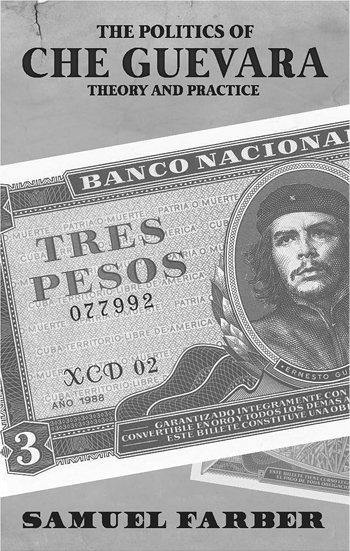
Visiting Raúl Castro's Cuba

by Samuel Farber Summer 2007

ON JULY 31, 2006, THE CUBAN government announced that due to a serious illness, the nature of which was declared a state secret, Fidel Castro was stepping aside as the head of state. His younger brother Raúl, officially designated as his successor since the early days of the 1959 Revolution, was "temporarily" replacing the commander-in-chief.

more

After Israel's Invasion: An Eyewitness Account from Gaza, the West Bank, and Israel

by Marie Kennedy Summer 2009

Gaza: War on Civilians in the World’s Largest Open-air Prison[1]

more

We Can Do It! The Case for Single Payer National Health Insurance

by Joanne Landy and Oliver Fein Summer 2008

[Ed. Note: This is a chapter in a forthcoming book Ten Excellent Reasons for National Health Insurance, eds., Mary O'Brien, M.D. and Martha Livingston, Ph.D. (New Press).]

more

Are U.S. Unions Ready for the Challenge of a New Period?

by Kim Moody Summer 2009

BY NOW IT SEEMS CLEAR that the United States has entered a new period of contradictory trends that presents a profound challenge to organized labor. First there is the deepening world recession that is bringing down some of American capitalism’s most high profile institutions from Wall Street to Detroit. At the same time, of course, it is wiping out millions of jobs, 4.4 million from December 2007 to February 2009.

more

Latin America: A Resurgent Left?

by John L. Hammond Winter 2008

LEFTISTS WON PRESIDENTIAL ELECTIONS IN 2006 across Latin America: starting (at the end of 2005) with the stunning victory of Evo Morales in Bolivia, through the election of Socialist Michele Bachelet in Chile, the predictable reelection of Lula in Brazil and Hugo Chàvez in Venezuela (though Lula, winning less than 50 percent of the vote in the first round, was forced into a runoff), and the runoff

more

Race Relations: the Problem with the Wrong Name

by Stephen Steinberg Winter 2001

Which deception is most dangerous? Whose recovery is more doubtful, that of him who does not see or of him who sees and still does not see? Which is more difficult, to awaken one who sleeps or to awaken one who, awake, dreams that he is awake?

— Søren Kierkegaard

more

Socialism and Homosexuality

by Thomas Harrison Winter 2009

SAME-SEX DESIRE has always been a part of human life.There is much evidence, though not yet conclusive, that a predominant sexual attraction to members of one’s own sex is innate. But innate or not, we know that it is definitely formed early in life, certainly before the age of ten.

more

The Change We REALLY Want?

by Joanne Landy Winter 2009

WITH THE ELECTION OF BARACK OBAMA, millions in the United States and around the world are hoping for relief from the dangerous arrogance and destructiveness of George Bush’s foreign policy. President Obama is expected to take important positive initiatives — like closing Guantanamo and lifting the rule denying international organizations receiving U.S.

more

Confronting Horror: Writing About Torture

by Kristian Williams Winter 2008

    I DID NOT DREAM OF BEING TORTURED.

    But I did dream of being caged, of being bound and blindfolded, of being kept cold and naked in a small steel box. I dreamed of terrible footsteps, always approaching, and the chilling sound of metal clanging against metal. I dreamed of endless screams, and of shadows that stretched toward me, and of hands holding instruments that I could never quite see.

    The dreams ended, always, before the pain could become real. But that is a small matter. The fear was real enough.

more

Revolutionary Unionism: Yesterday, Today, Tomorrow

by Dan Jakopovich Summer 2007

THERE IS A CONSENSUS among democratic socialists today that the struggle for deep social change has to somehow reflect the kind of society we want to build, but this remains inseparable from the questions of power, political strength and effectiveness because prefiguration goes beyond the "pure" ethical sphere to include wider issues of ideological/cultural, political and socio-economic h

more

Horseracing

Desness FlakesSummer 2008

[Note: The first two letters below appear in New Politics no. 45. Further correspondence is available on the web only. Additional comments are welcome; please submit to the editors.]

more

Family Policies in Post-Communist Nations

by Betty Reid Mandell Summer 2008

THE COUNTRIES THAT CLAIMED TO BE Communist also claimed to meet the needs of their families. What happened to those claims when the countries became capitalist? The fall 2007 issue of Social Politics seeks to answer that question. It analyzes family policies of Russia, Poland, Hungary, the Czech Republic, Ukraine, Moldova, and Armenia.

more
  • Home
  • |
  • About
  • |
  • Contact
  • |
  • RSS
  • |
  • Current Issue
  • |
  • Online Features
  • |
  • Submissions
  • |
  • Advertising
  • |
  • Donate
  • |
  • Subscribe